When autumn refuses to leave and winter decides to make an early entry, the combination calls for a beautiful artistic exploration in photography.
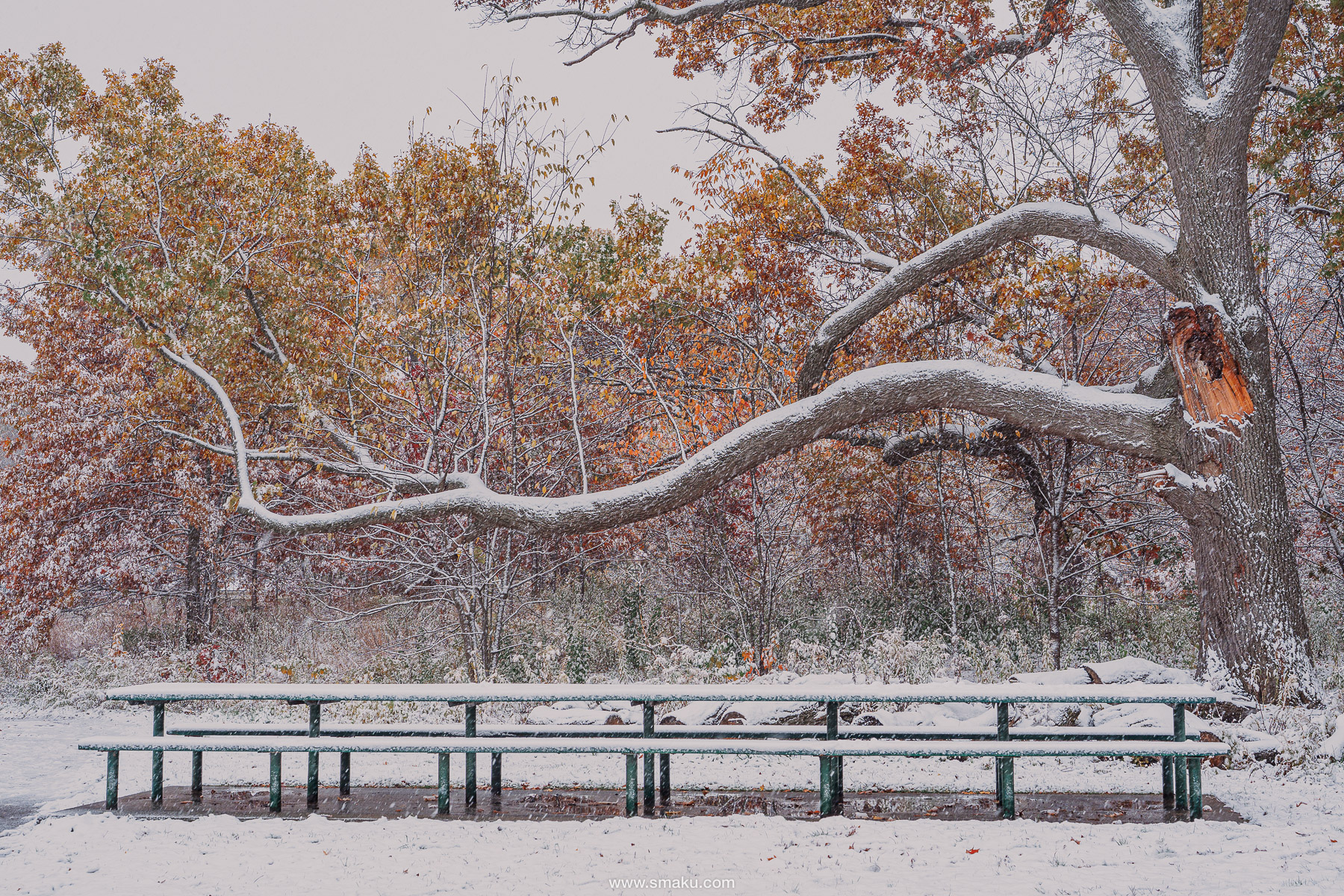
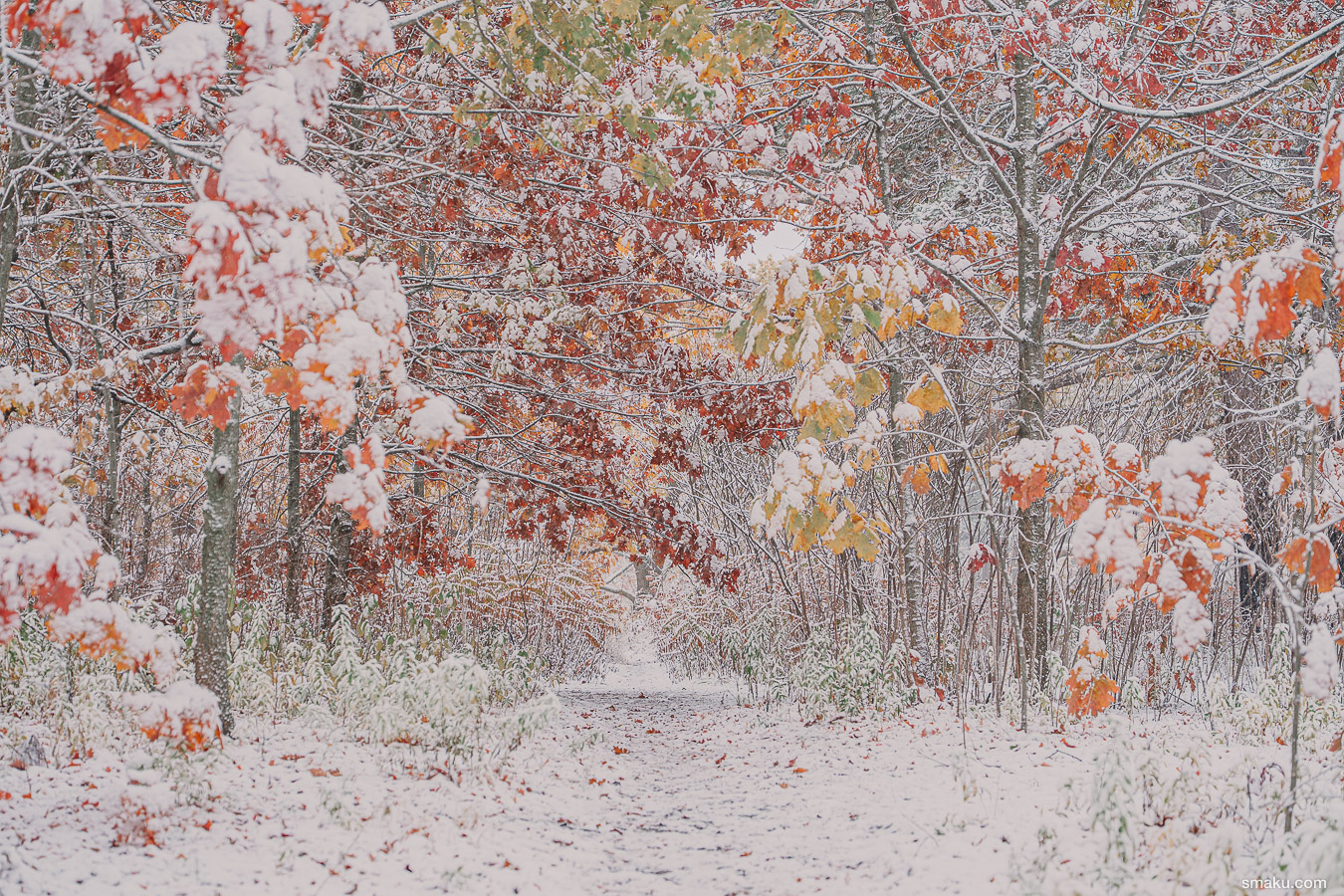
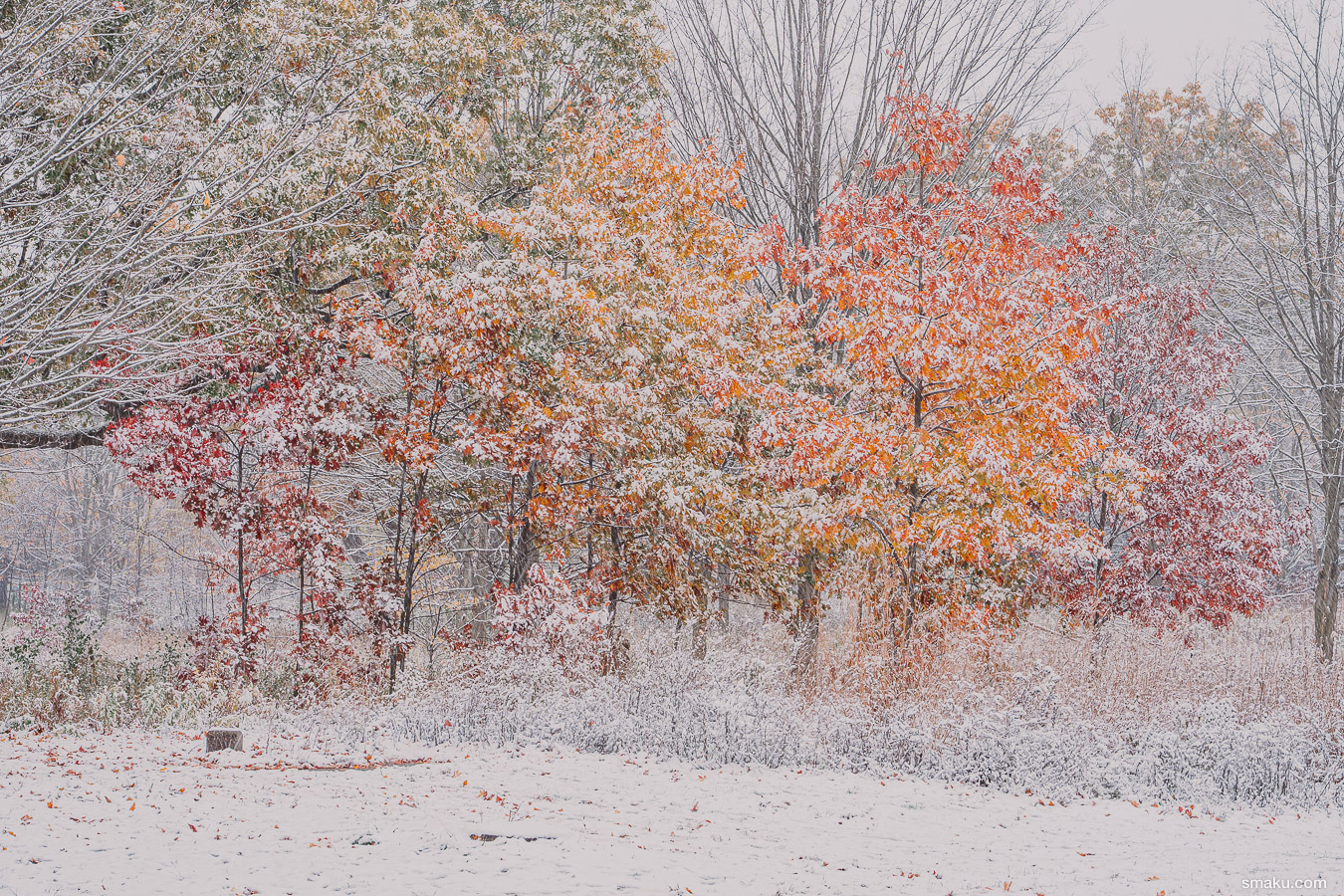
Toronto had its first snowfall of the season in the first week of November—and with autumn colours still lingering, this combination of two seasons colliding was just yearning to be photographed.
And that I did!
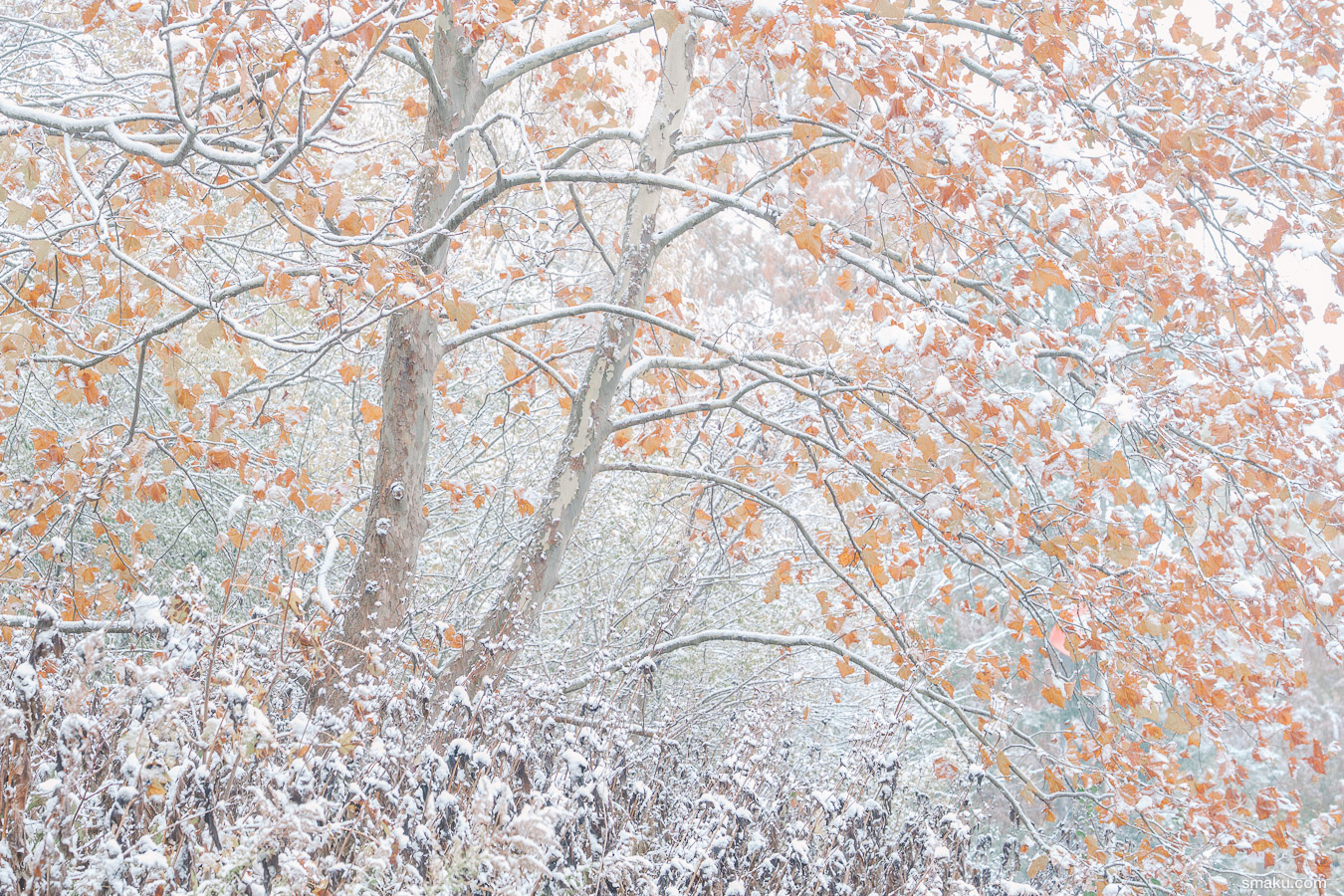
Anticipating a heavy snowfall, I went out to one of my favourite parks to photograph the woodlands in all its autumn and winter glories.
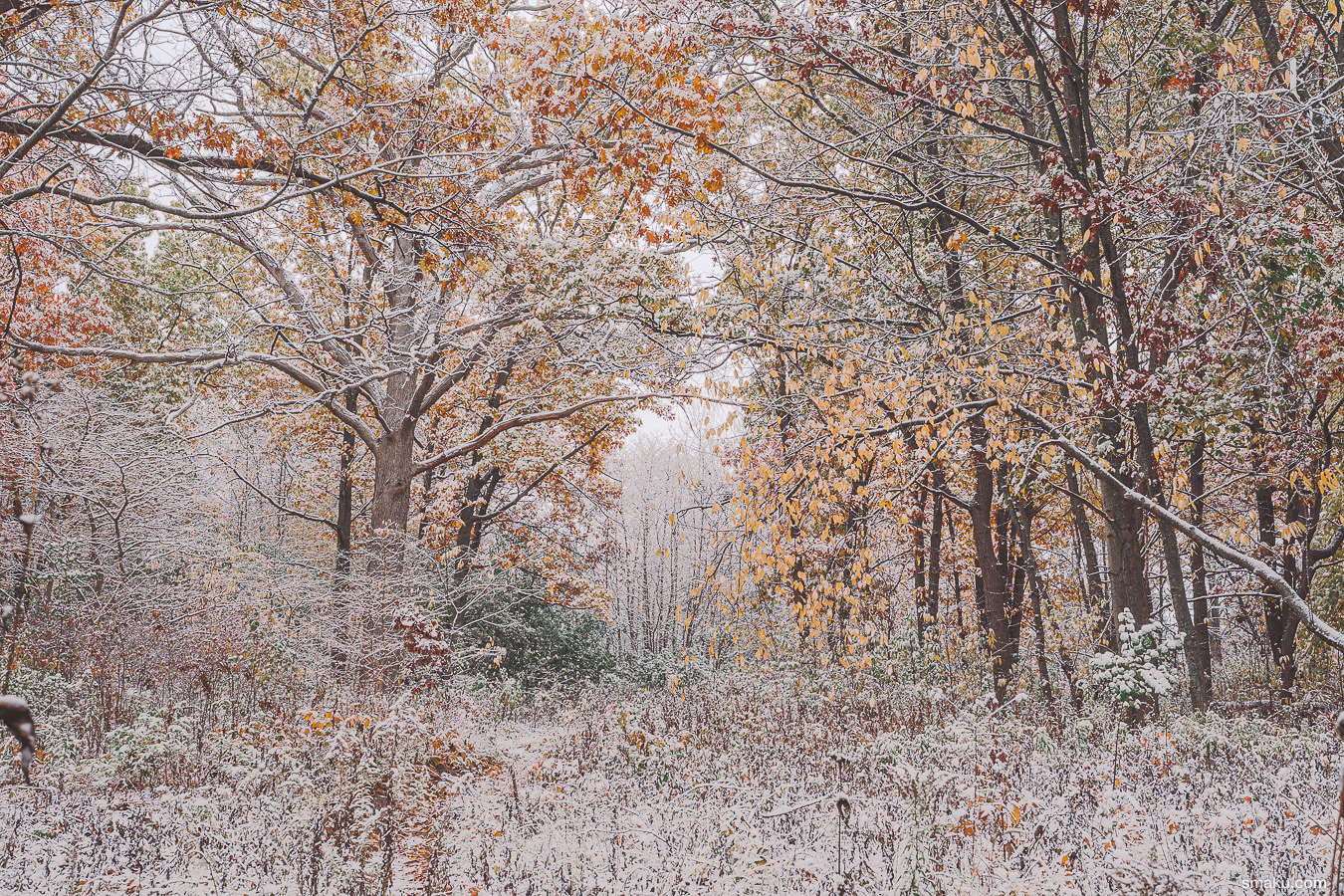
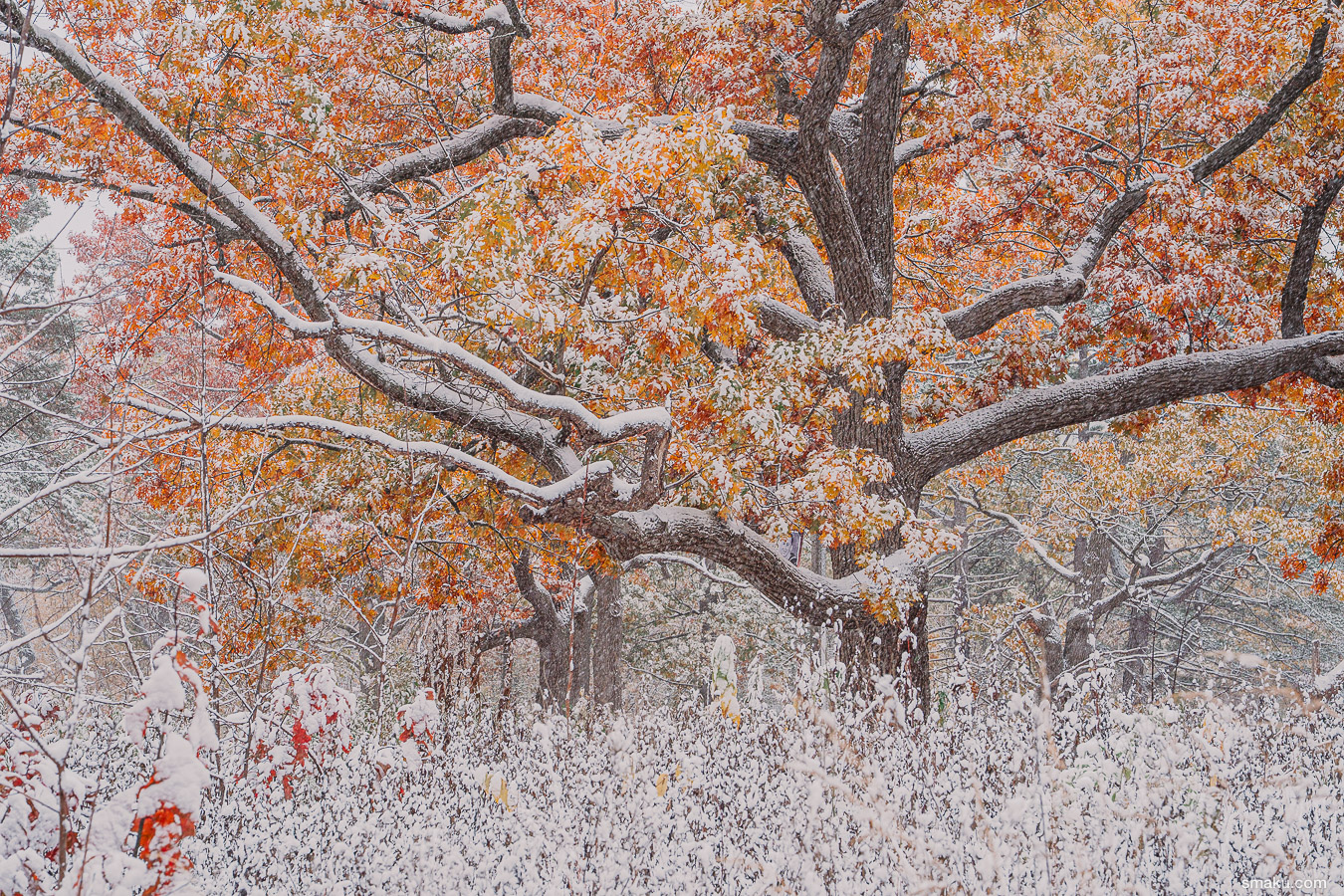
This park hosts an array of tree species, but the oak savannahs really play a special role in the woodlands. These are beautiful to photograph any day of the year, but I truly love their appearances in autumn with all the vibrant colours filling our view.

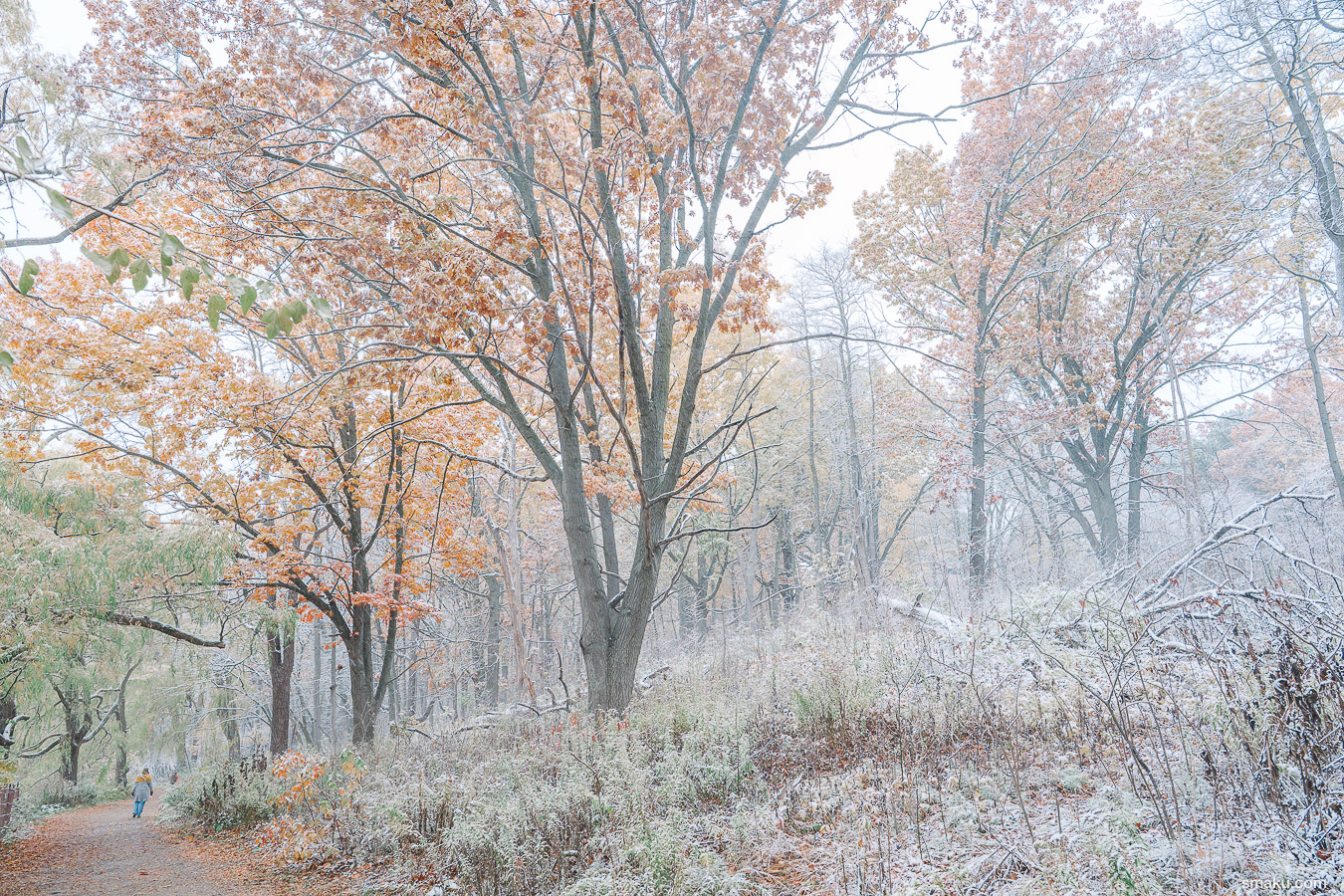
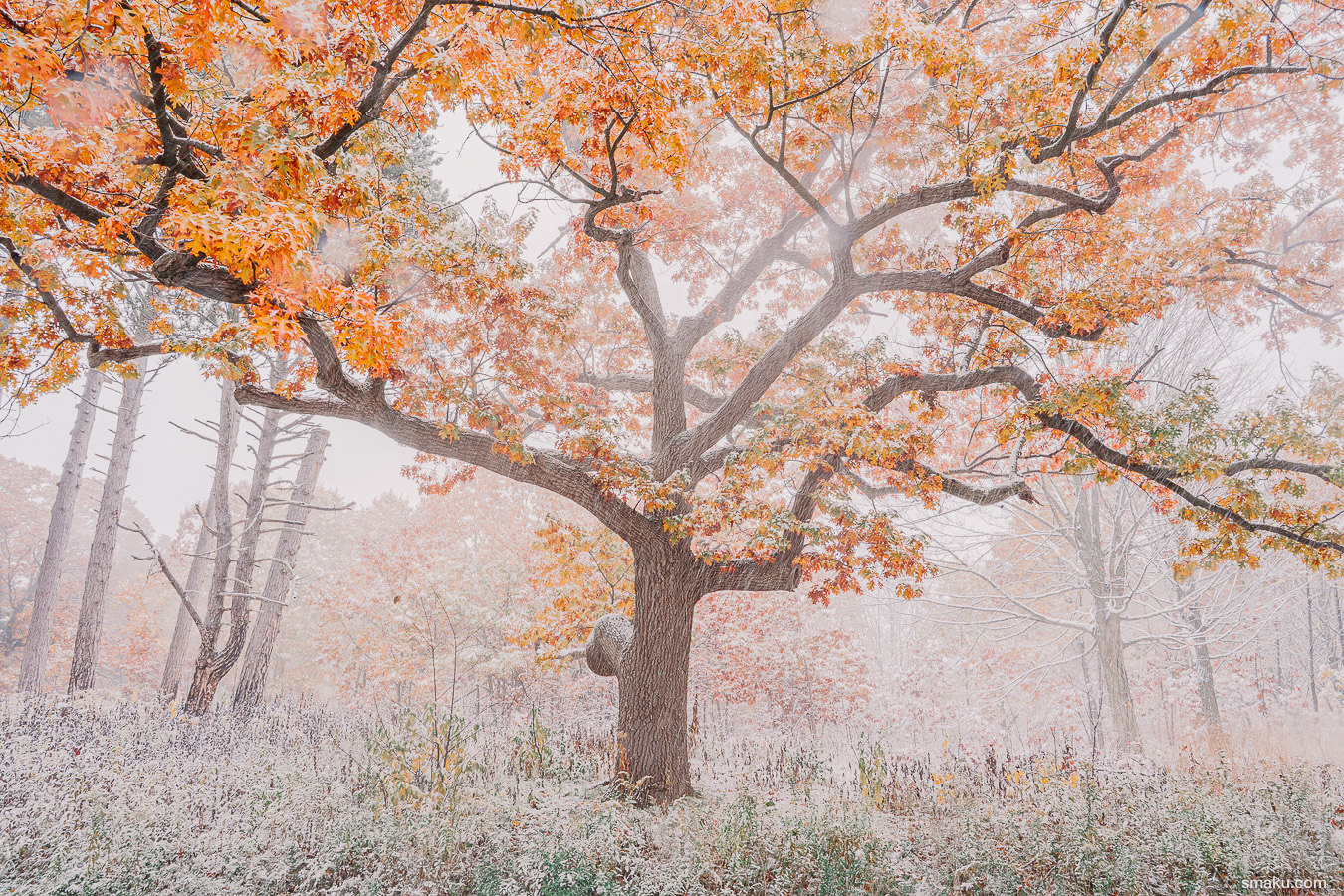
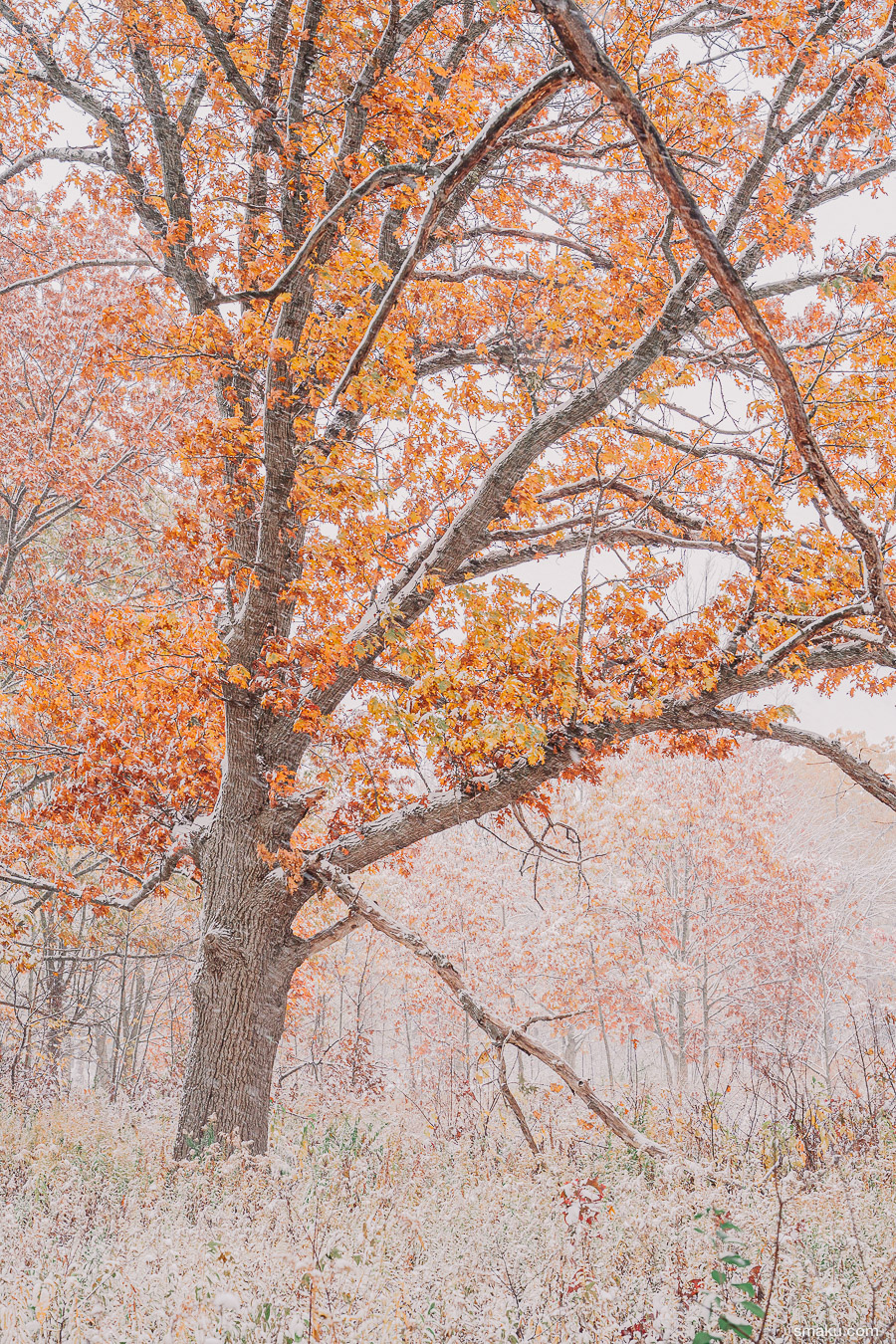
In particular, the black oak savannahs are grand, imposing, and beautiful. These old-growth trees grow for up to 200 years, and the leaves turn a beautiful yellow-orange that accent the surrounding greenery and ground shrubs.
High Key
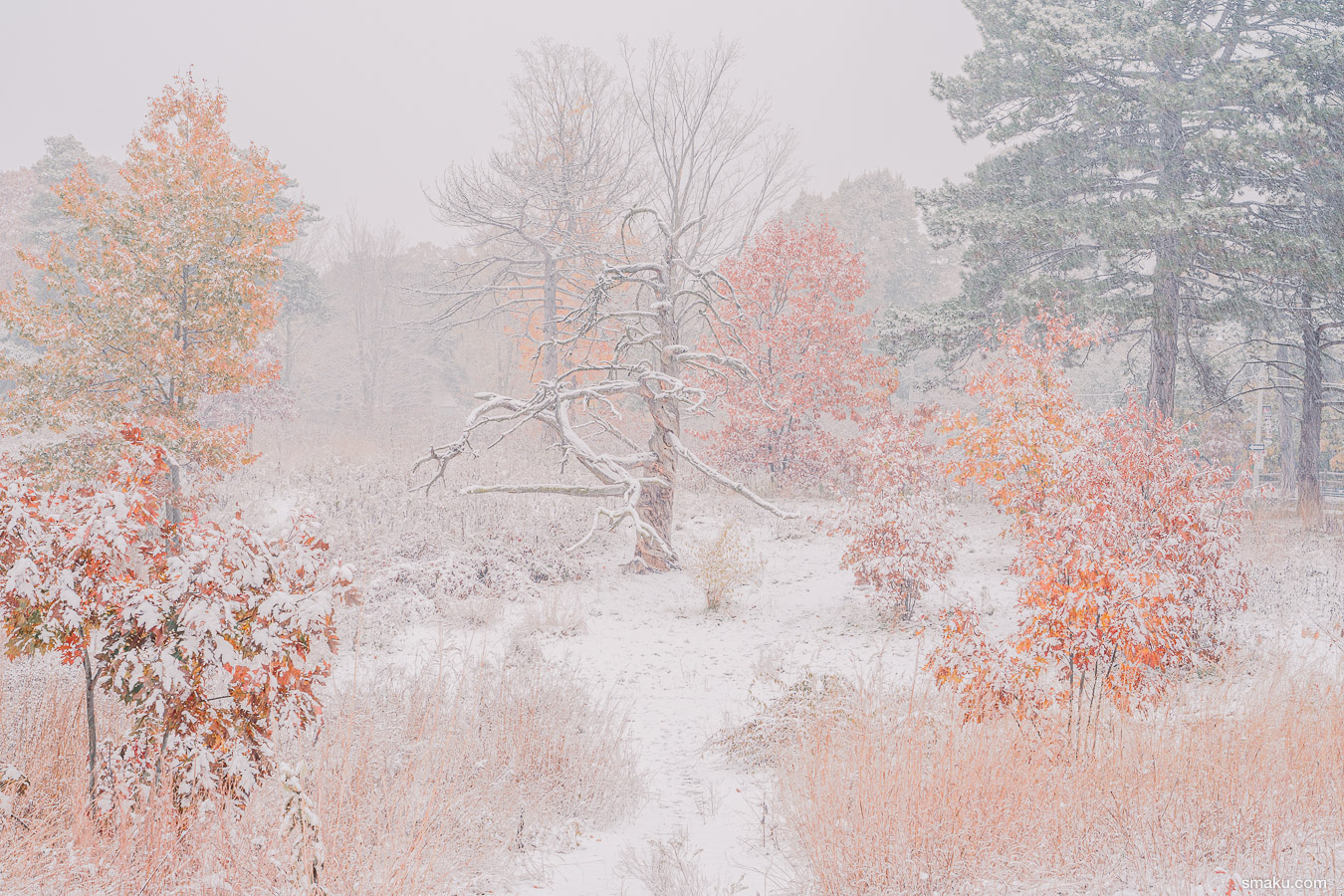
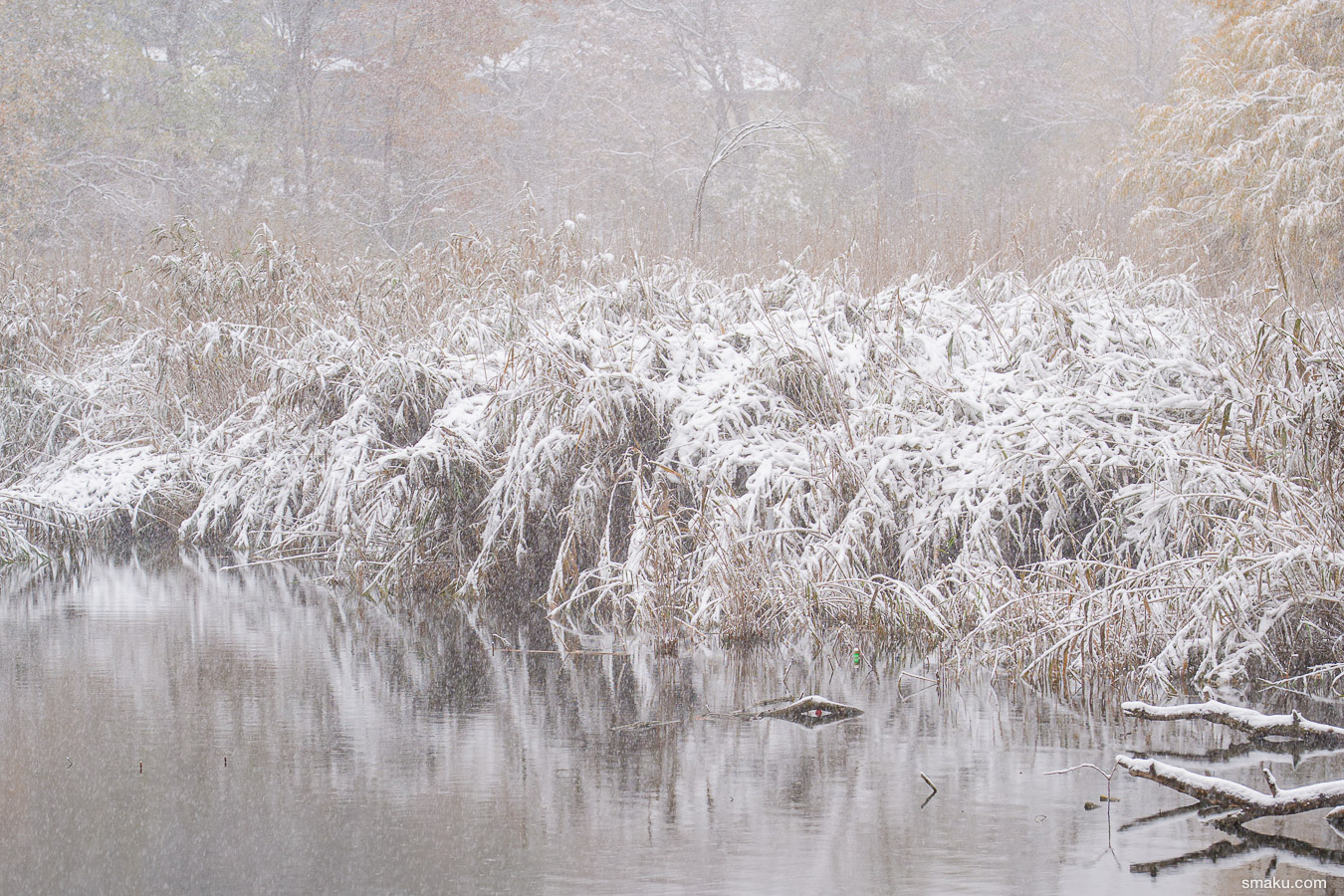
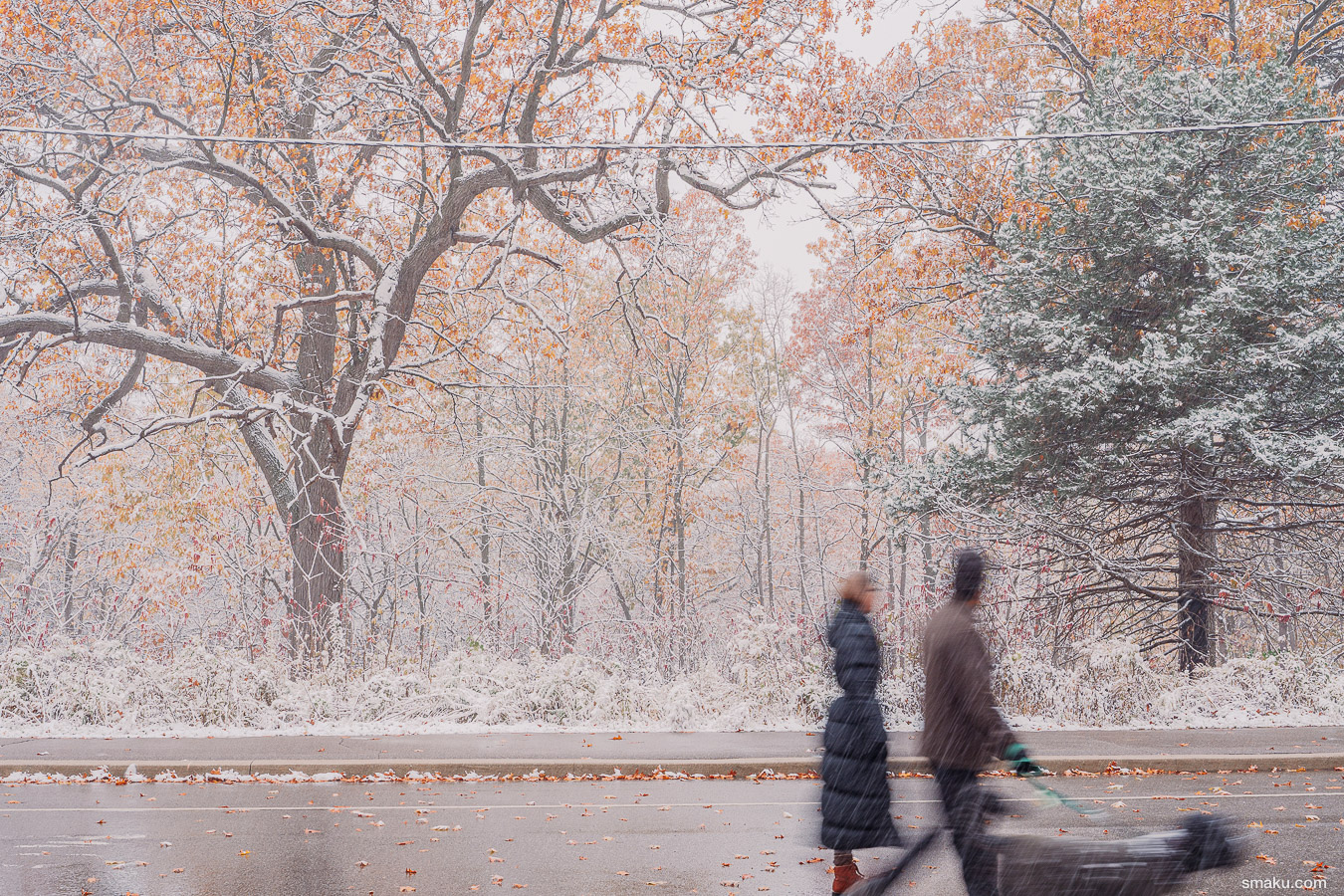
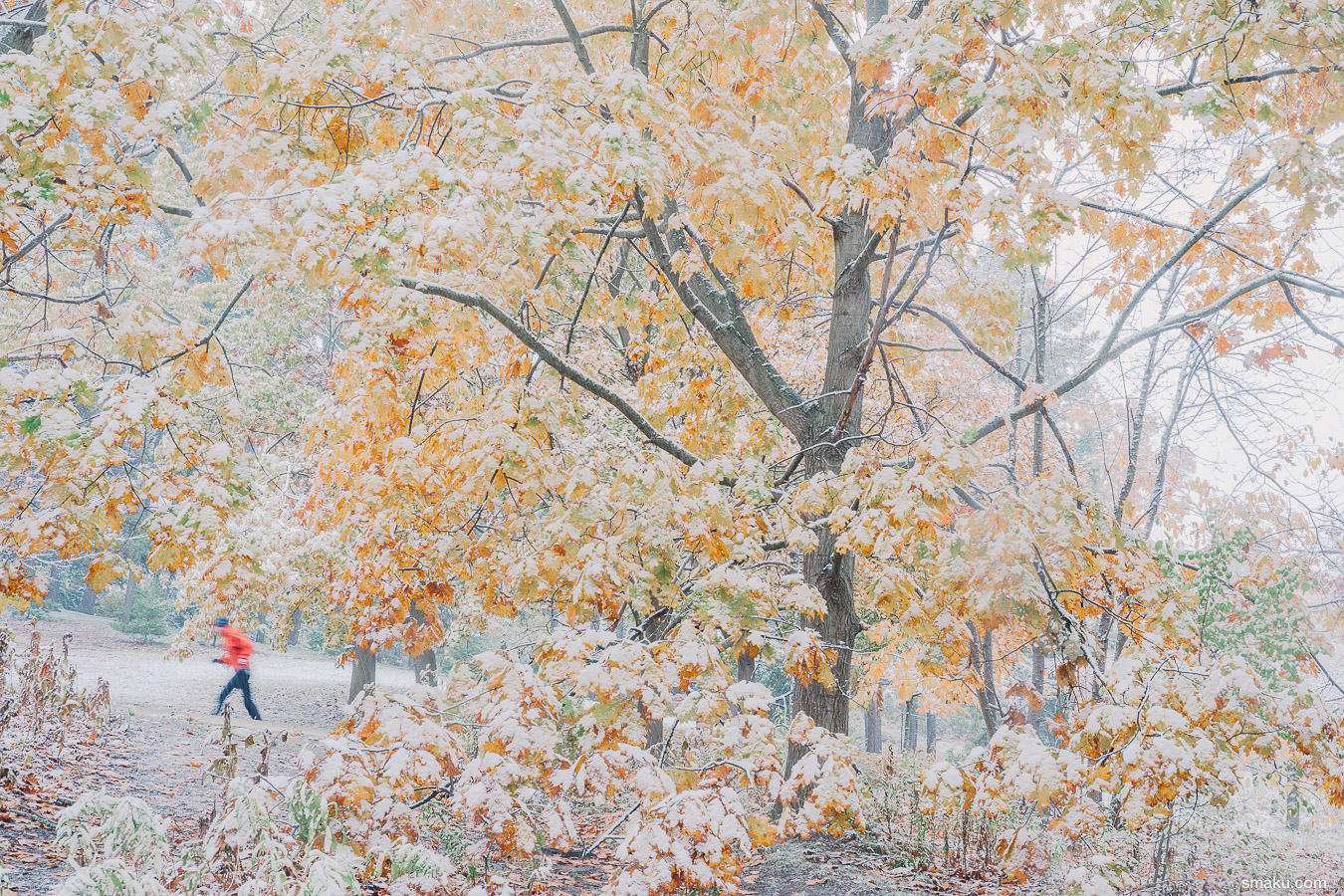
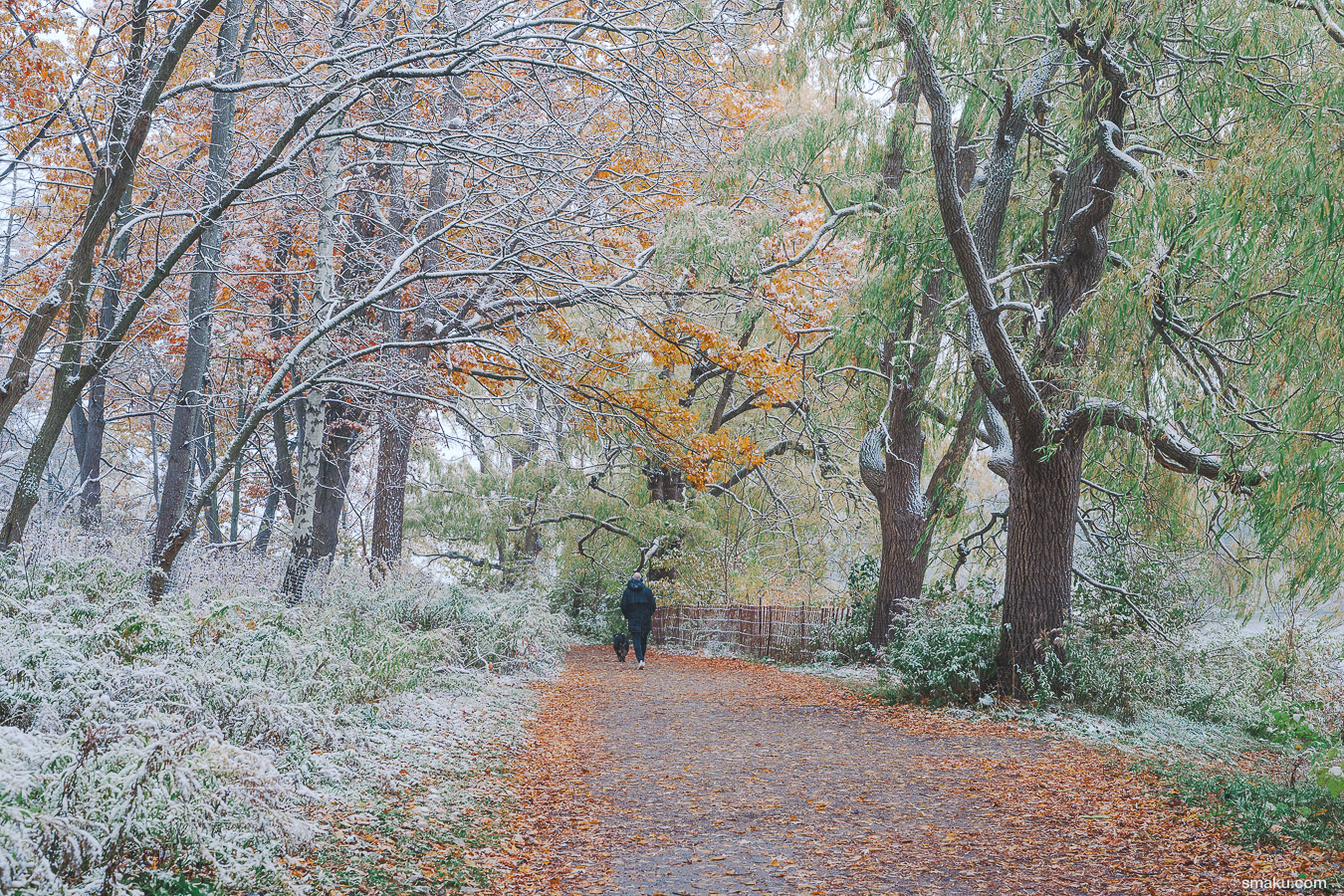
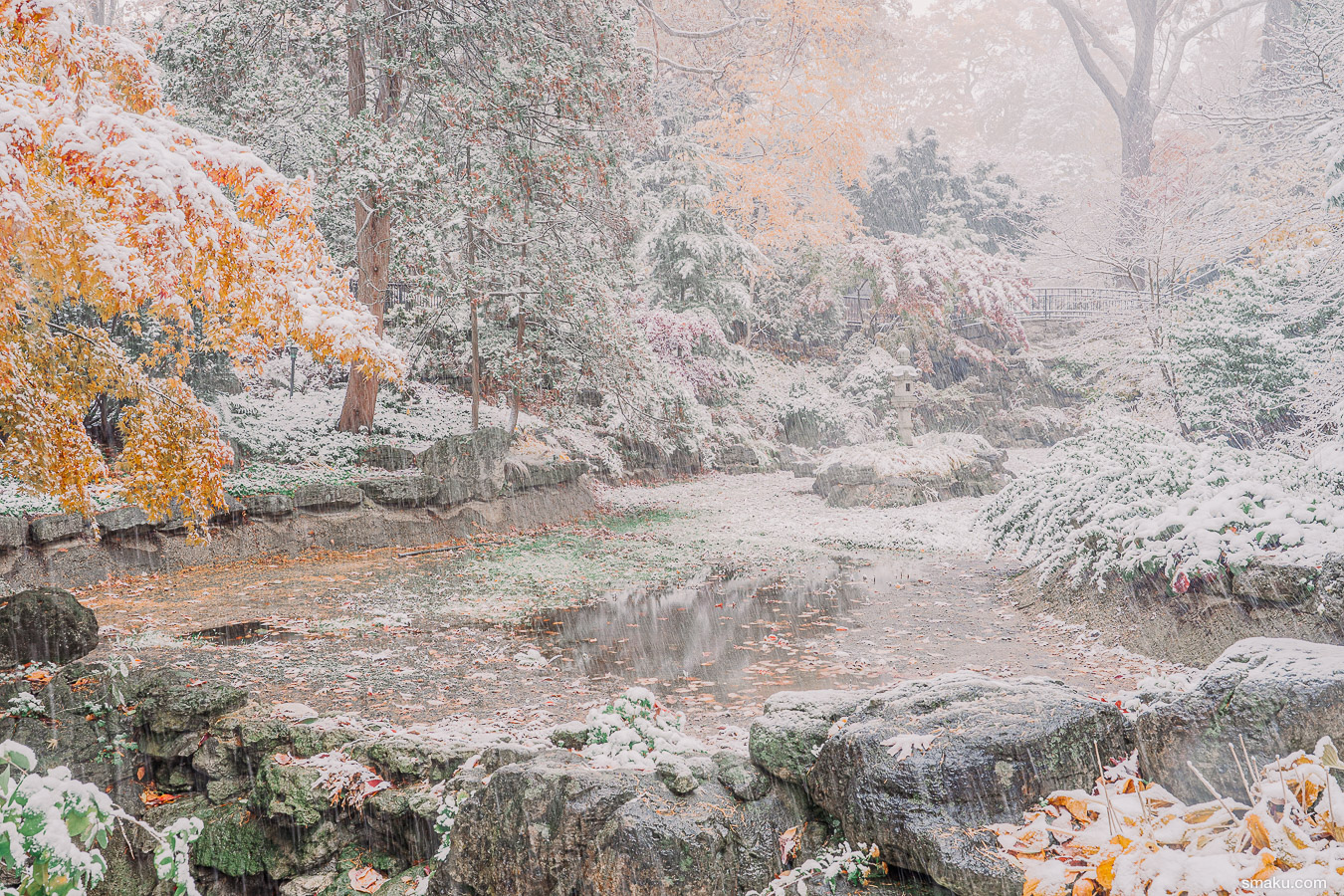
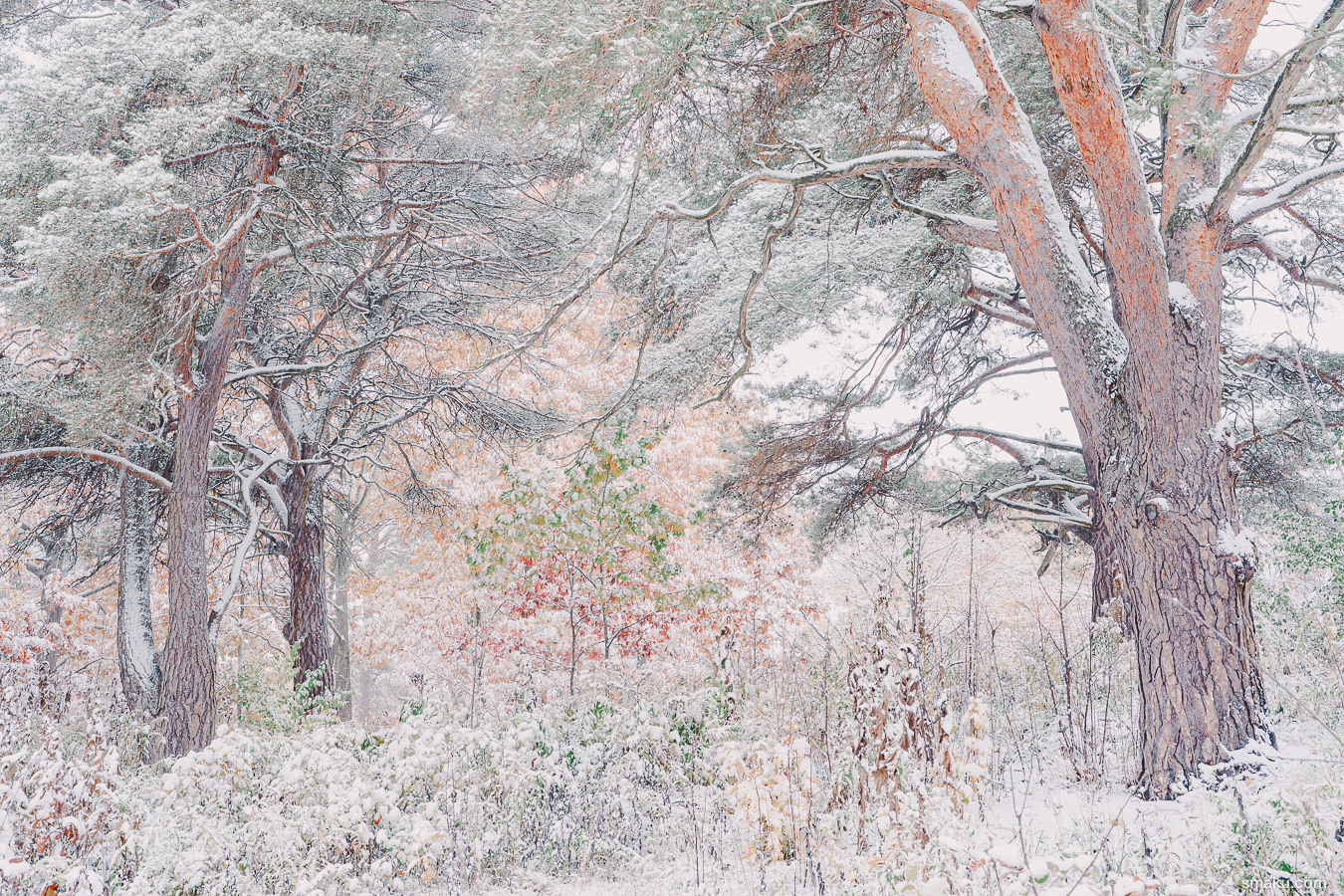
For many of my images, I took the liberty of creating a set of higher key images to evoke a more ethereal take on the season. The density of snowfall was so much so that the shadows in the landscape were often augmented into the midtones, thereby creating a less contrasty scene. By overexposing a little bit and making sure the highlights aren’t clipping, this helps to accentuate the beauty of the heavy snowfall. Click image to enlarge.
Adding Texture
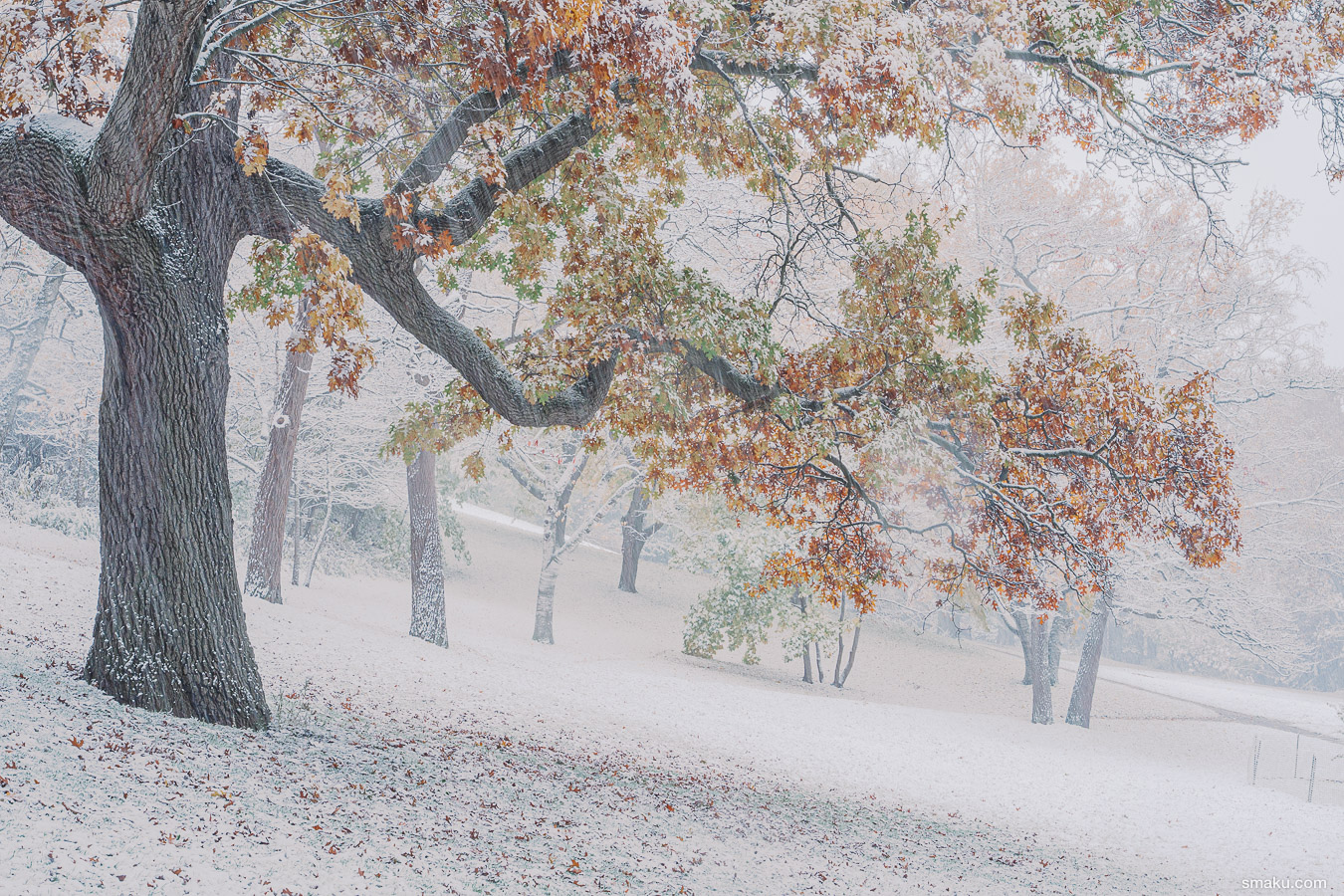
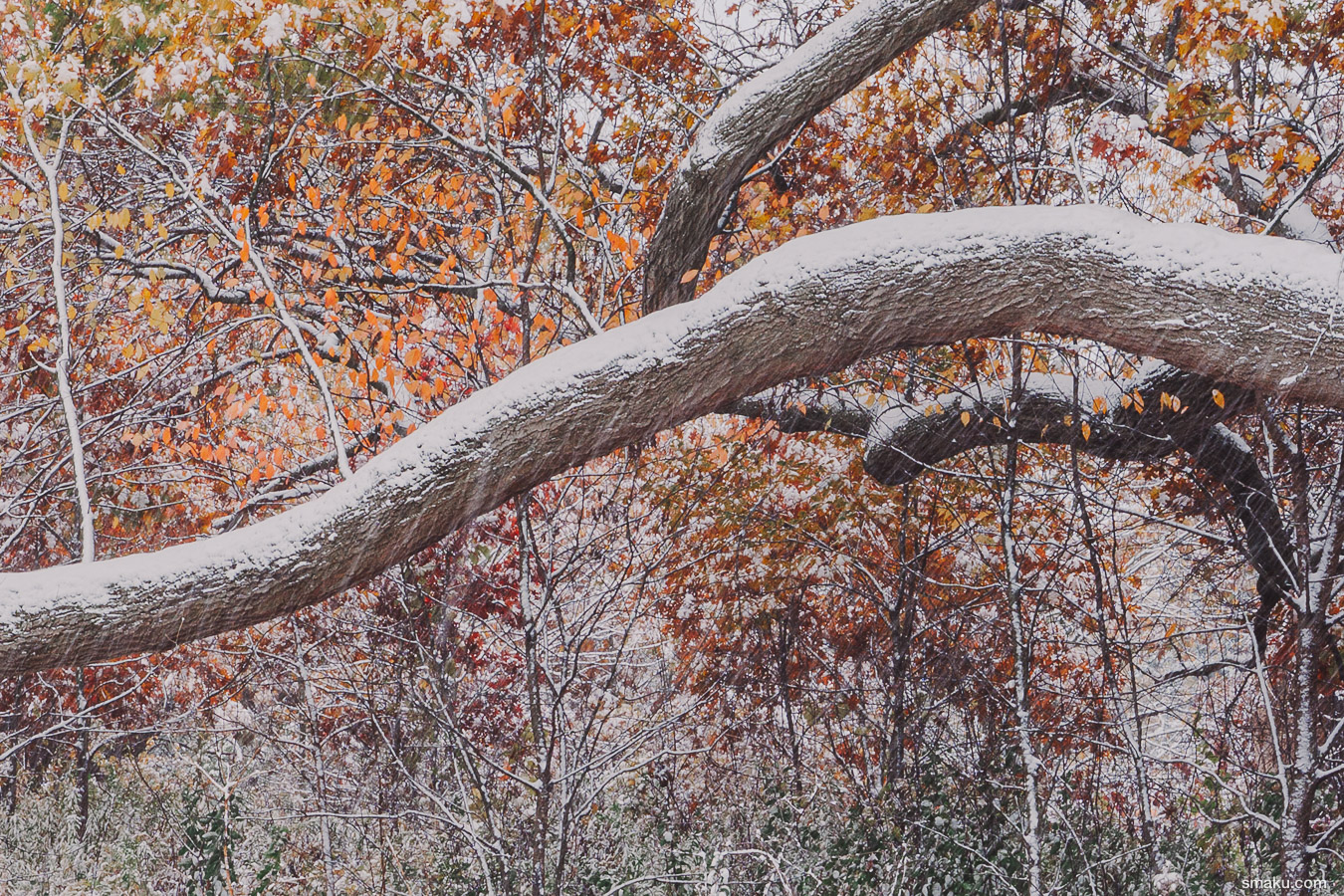
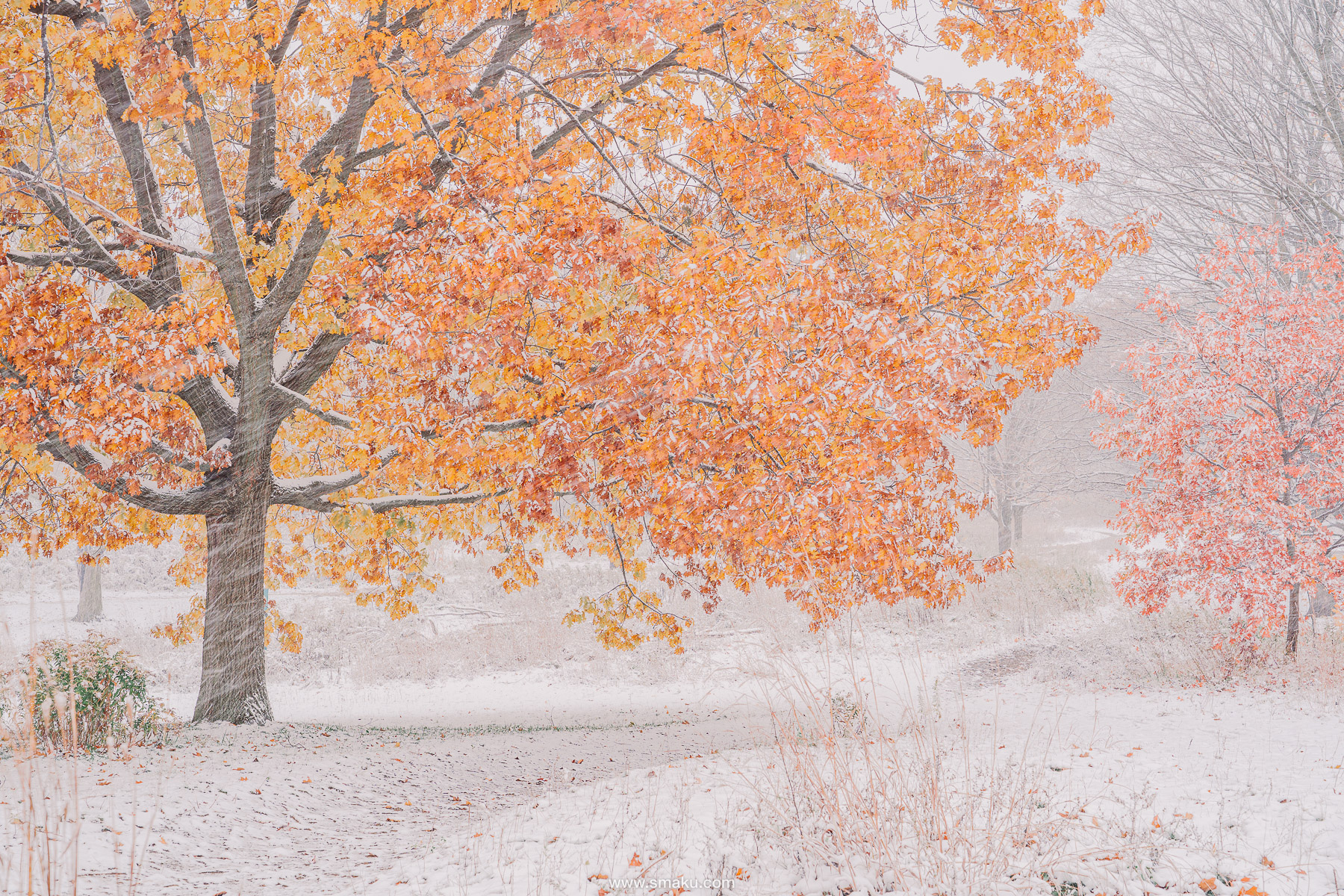
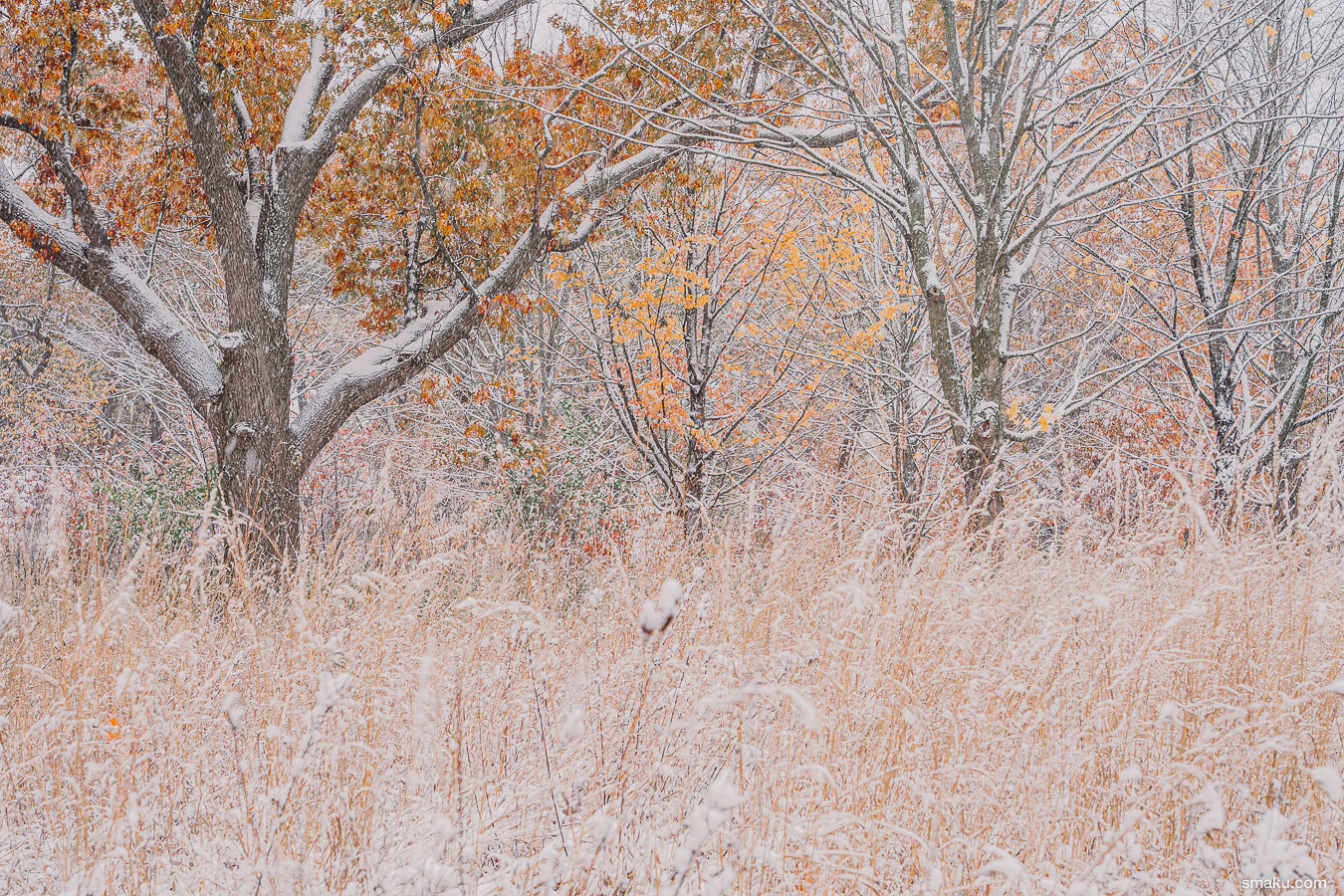
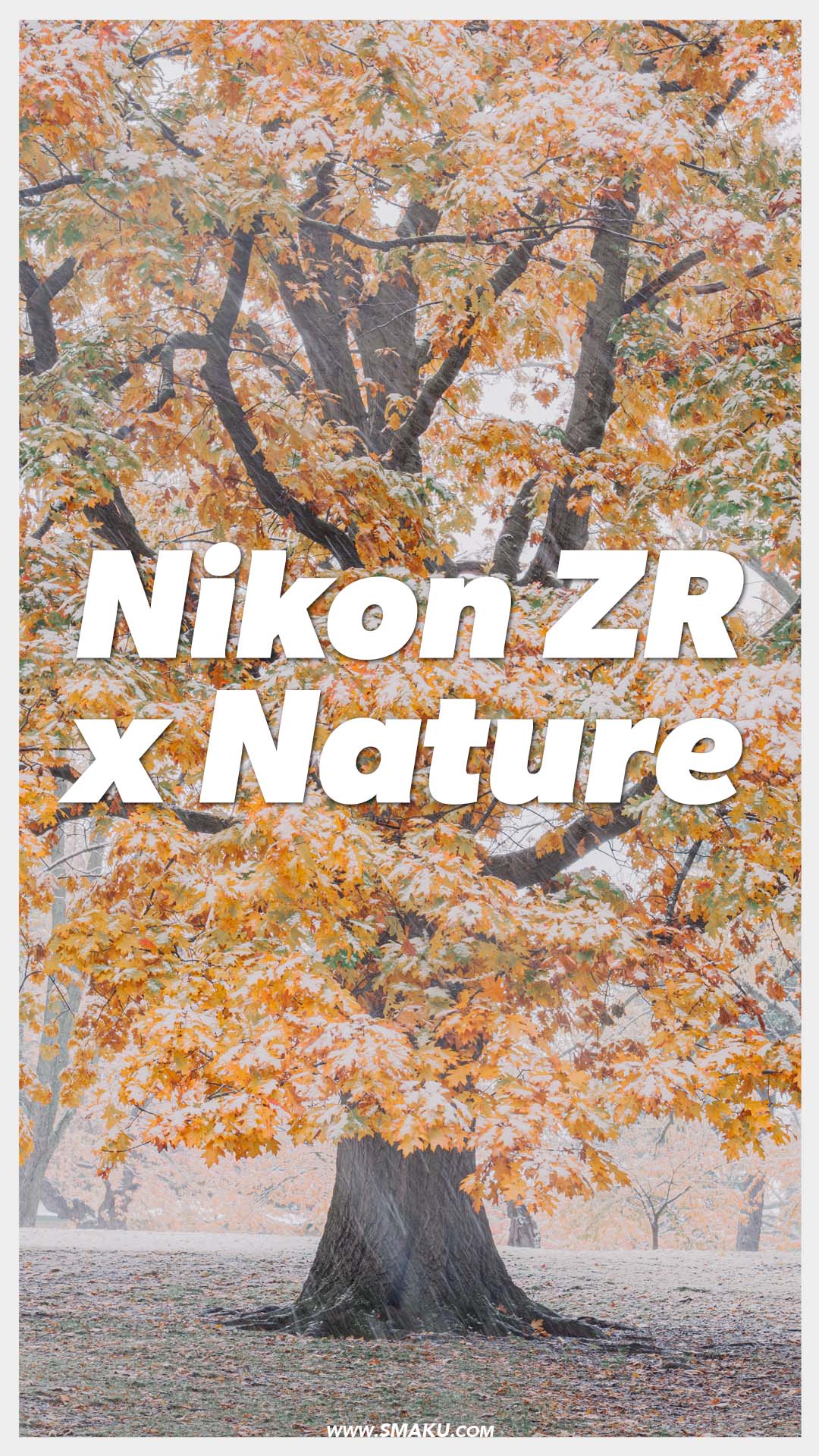
With this much falling snow, you can get really creative with your photographs. In an otherwise static scene, I often produce a little bit of dynamism by slowing my shutter speed down. This creates streaks of snow, rather than dots of snow. It also creates texture and added interest in areas where there may not have been any in the first place.
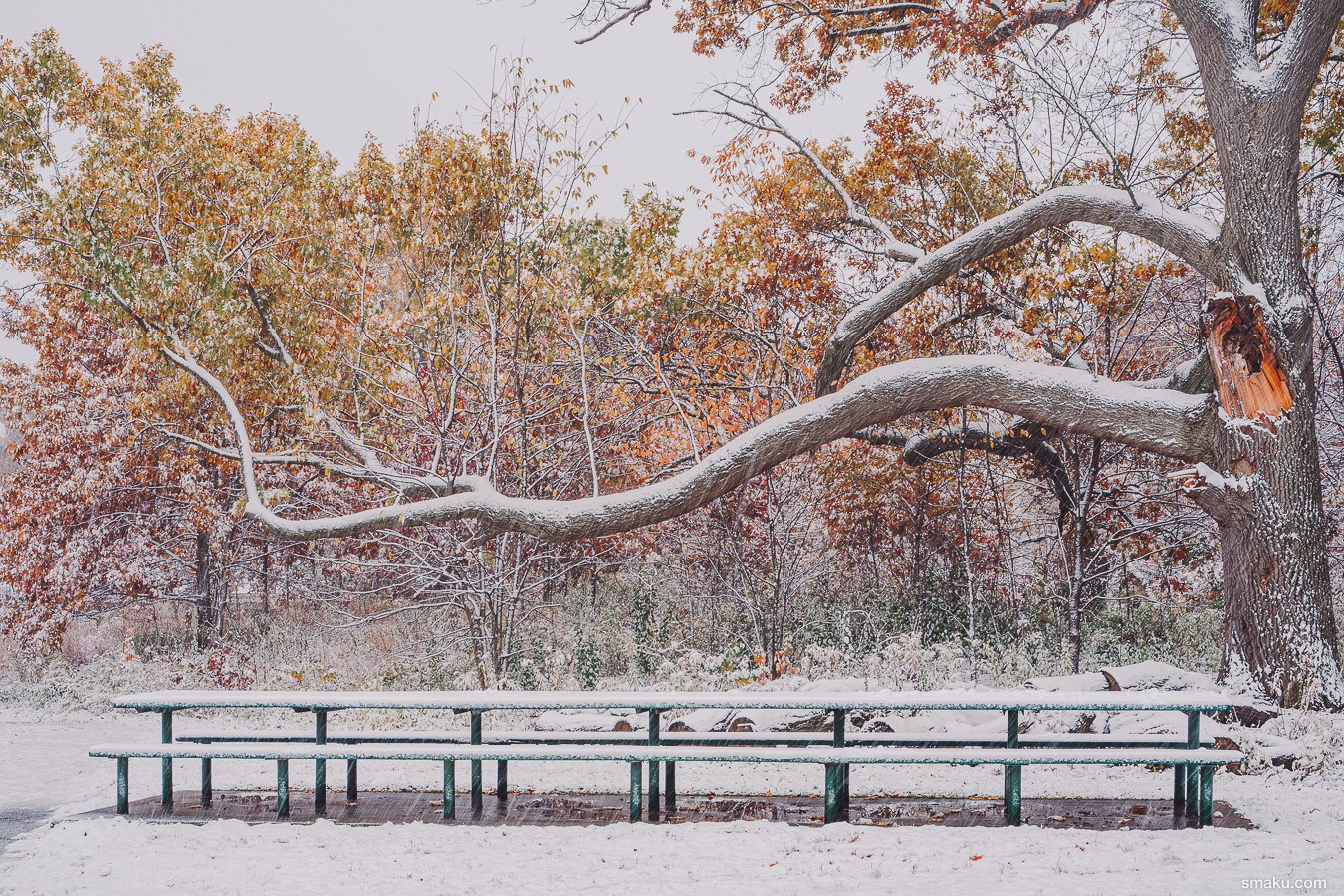
If you look closely in the shadow areas of these images, you’ll see these streaks of white, created by a slower shutter speed.
Brace yourself
All of these long exposures are hand-held since I did not want to limit my movement by carrying a tripod. Fortunately, with modern cameras, the in-body stabilization is so good that we can hand-hold our cameras at much slower shutter speeds than I once could with my dSLRs.
I try and limit myself to about 1/10 sec. to ensure I still have sharp subject matter in the image.
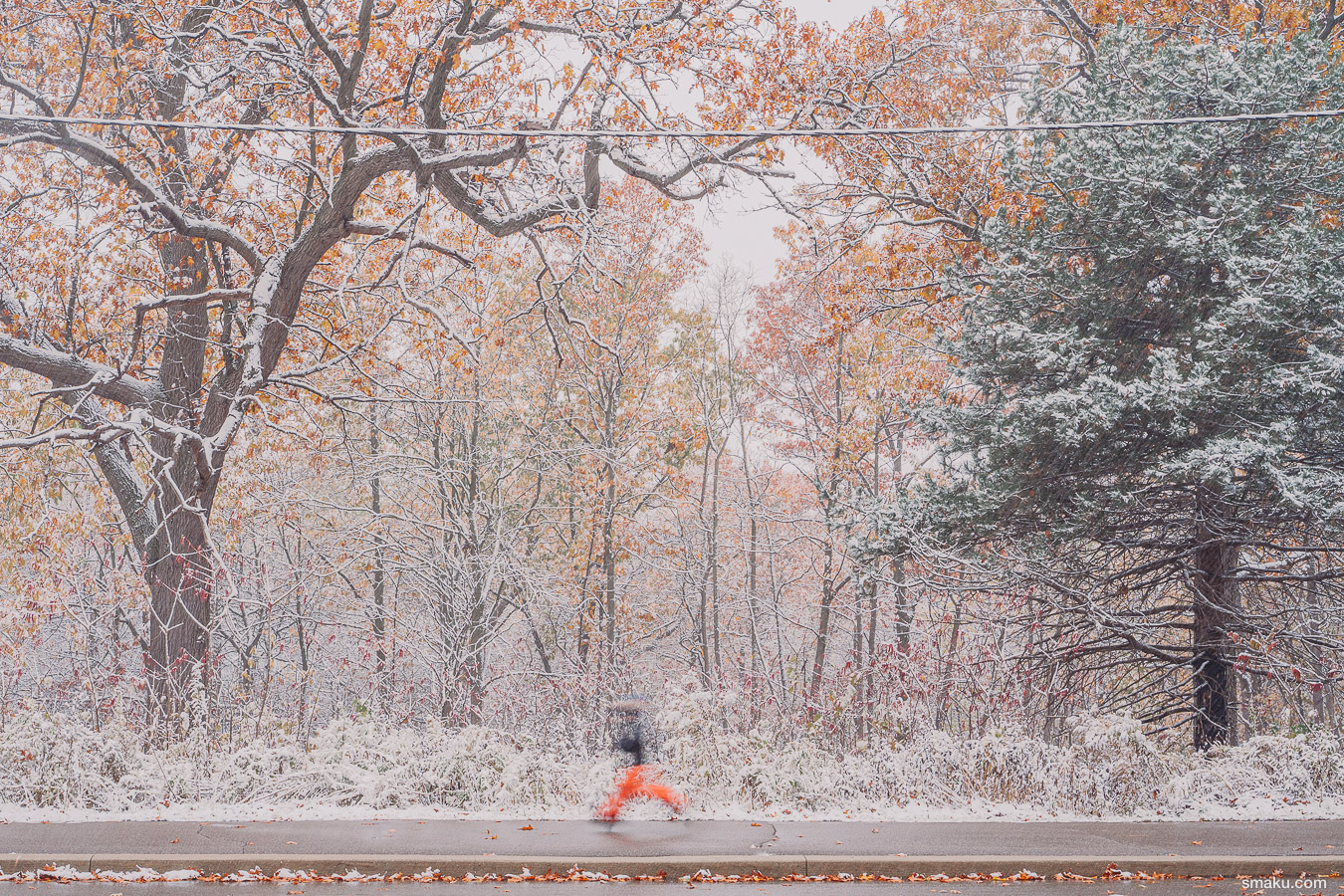
Adding People
Typically, this 1/10 sec. is slow enough to illustrate the movement of people walking. While the shutter speed is dictated by how fast and close people are walking by your lens, 1/10 sec. is just slow enough to blur an individual walking at a normal pace. Click image to enlarge.
Gallery
View some of the other images that I took here in this gallery, and view my YouTube video where I walk you through my adventure in the field.


YouTube
Do you like winter photography or have winter photography tips you would like to share? Write them in the comments for everyone to read!